9th February 2020 – Professor Iain Jackson
We were grateful to Professor Jackson of Liverpool University, School of Architecture for replacing our scheduled speaker at late notice. His presentation was based on his book recently published by Historic England.
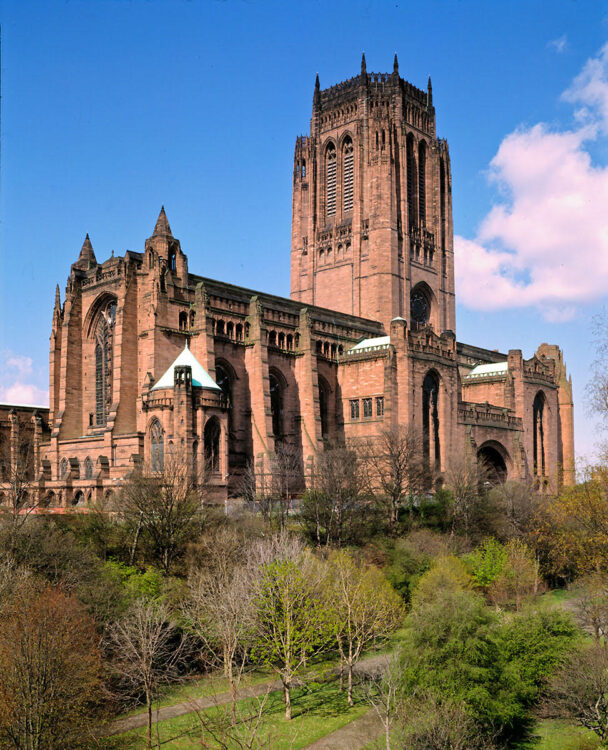
It was suggested that through his commissions for banks, shipping companies and major infrastructure projects Rowse has enriched Liverpool’s townscape more than any other.
At 16 he was articled to Richard Owens and Sons, enrolling at Liverpool University’s School of Architecture 2 years later. He was one of the first pupils of Charles Reilly and won a scholarship to study in Rome. Charles Reilly was to later judge some of the architectural competitions which his student entered. The school’s interest under Reilly and followed by Rowse was in classicism and the beaux arts movement as manifested in the large steel framed building of America and we see this in his later designs.
It was stated that Rowse’s career focused on dealing with 2 design challenges, namely the dwelling house and the monumental.
He lived in Heswall and his early house projects came from that locality including Millmead House, Willaston (for his mother) and Allandale, Farr Hall Dr, Heswall (for another family member). He also won a competition for the rebuilding of Heswall Golf Club following a fire.
His first major commission was the Manbre and Garton Sugar Refinery (1918) in Liverpool. This followed Rowse seeking out clients who thought big with matching budgets, entering competitions for 2 major projects in Water St, namely India Building for the shipping firm Alfred Holt and Co and headquarters for Martins Bank. Both projects which took place in the 1920s/30s were of exceptional magnitude and extravagant expression firmly establishing Rowse’s reputation.
During the same time period he collaborated in the largest infrastructure project in the UK, the Birkenhead (Queensway Tunnel) which opened in 1934. He designed its office building, ventilation shafts and entrances/exits drawing on strong geometric forms decorated with Egyptian motifs.
Further projects were the Philharmonic Hall (1939), Pilkington’s headquarters (1936) and the rebuilding of India Buildings and Georges Dock building after war damage.
Post war he returned to the design of housing in the form a large municipal housing project, the Woodchurch Estate, Wirral. This took the form of cottage style dwellings set around village greens. The estate is in sharp contrast with the usual image of social housing and is now a Conservation Area.
It was highlighted that Rowse adopted astute business practices in negotiating his fees. This included office accommodation for himself at the showcase projects India Buildings and Martins Bank, free Mersey tunnel tolls and a box at the Philharmonic Hall.
Although Rowse worked on projects outside Liverpool including abroad, it is the civic duty of architecture that really shines through in his work at home and Liverpool is greatly enriched by it.
Kim Rawlinson